
Modular construction is often framed around speed, cost and productivity. Those benefits can be significant, but they are not automatic. Whether a modular approach creates value depends on how well it suits the project and how much can be resolved upfront.
The commercial case is heavily influenced by scale, repetition and how early the design and delivery model can be resolved. Manufacturing capability, logistics, procurement and approvals also determine whether the anticipated efficiencies can be realised. When those elements align, modular construction can reduce site activity and improve delivery certainty. When they do not, complexity can simply shift elsewhere in the programme.
At Robert Bird Group, the starting point is understanding the project conditions, testing the constraints and identifying where a modular approach can genuinely add value.
Matching the method to the project
There is no single modular solution. The right approach depends on the building type, scale, level of repetition, site constraints and the flexibility the project needs to retain through design.
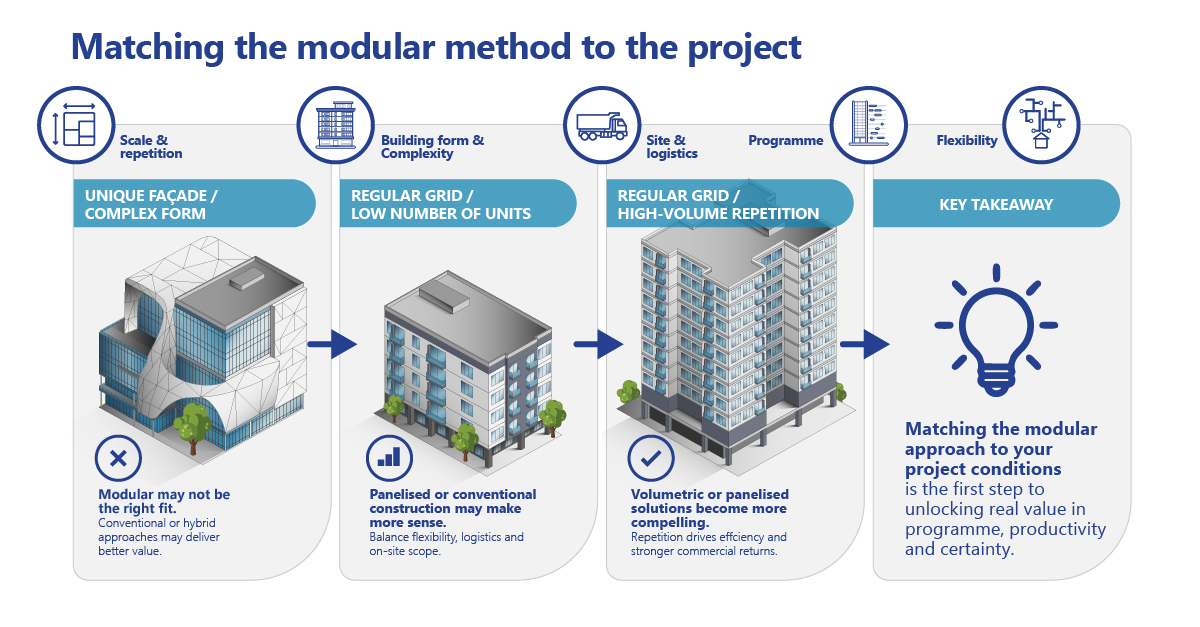
Scale is critical because modular construction requires more investment upfront, and the commercial return improves as that effort is repeated across a larger number of units. If a scheme begins with a small number of module types and gradually accumulates bespoke variations, those efficiencies can quickly erode.
The degree of offsite completion is part of that decision, with volumetric and panelised systems offering different balances of speed, flexibility and logistical exposure.
Volumetric construction can move a large proportion of work offsite, with substantially more of the building completed before modules reach site. That efficiency comes with tighter constraints around geometry, interfaces and logistics. Manufacturing, transport and site installation therefore need to operate as one coordinated programme.
Panelised systems generally retain more flexibility and can reduce some of those logistical constraints, although more work remains to be completed on site.
Programme certainty starts upstream
The programme advantage of modular construction is created during design. Module dimensions and key structural interfaces with architecture and services need to be resolved earlier than on many conventional projects. Once fabrication parameters are fixed, late changes become harder to absorb without affecting cost or programme.
This shifts more design effort to the front end but creates a more predictable manufacturing and installation sequence. It also means the structural engineer, architect, contractor and modular supplier need to coordinate early, especially where modules connect with conventional structure.
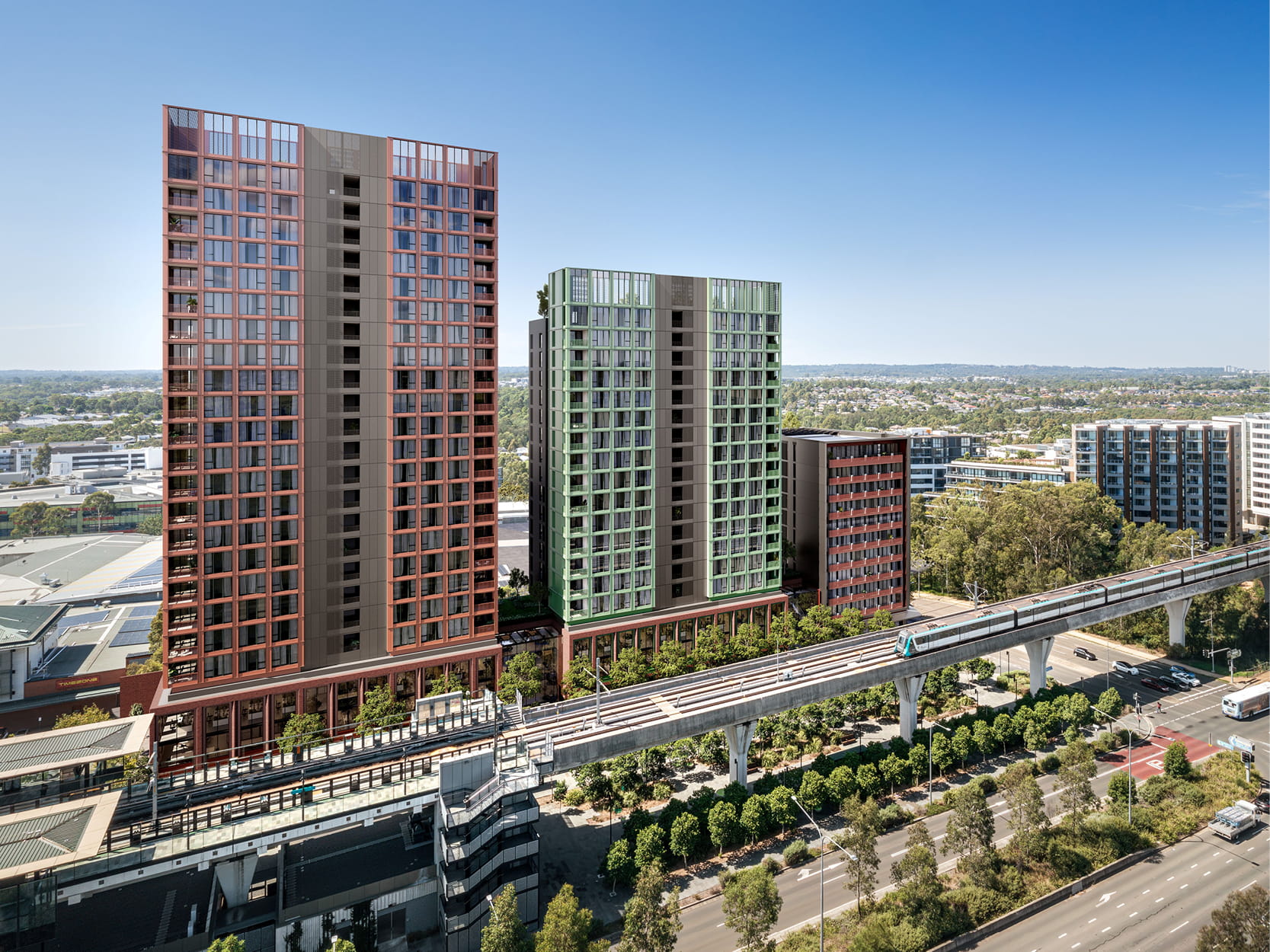
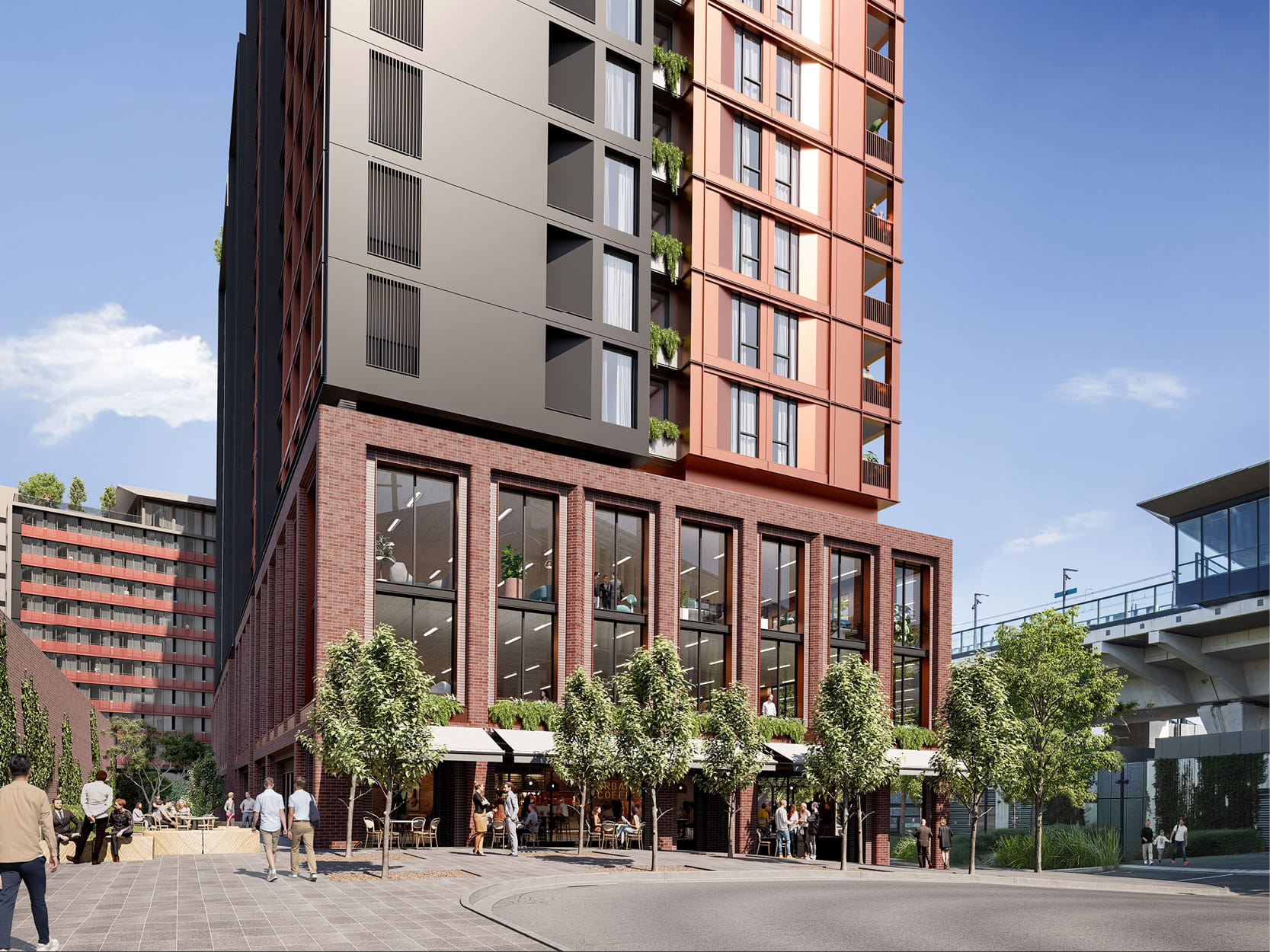
| Above: At Freecity’s approved Rouse Hill Metro development, Robert Bird Group has been involved from concept stage, providing structural and civil engineering across the podium, basement and modular residential levels. Early work on transfer strategies and structural coordination has helped resolve how the three-tower volumetric scheme connects with the conventional structure before installation. |
Design the building, not just the module
A modular building still has to behave as one structural system. On lower-rise schemes, the modules may be largely self-supporting above the foundations. As height increases, a separate lateral system such as a concrete core is more likely to be required, and the modules need to be designed as part of that wider structure rather than as identical standalone units.
Repetition at module level does not necessarily translate into an identical structural solution across the whole building. Engineers need to understand how lateral loads transfer through the diaphragms and connections between modules. They also need to account for tolerances across multiple levels and confirm that elements such as corner castings can accommodate the required forces. In seismic regions, stiffness and movement at the joints need to be explicitly allowed for.
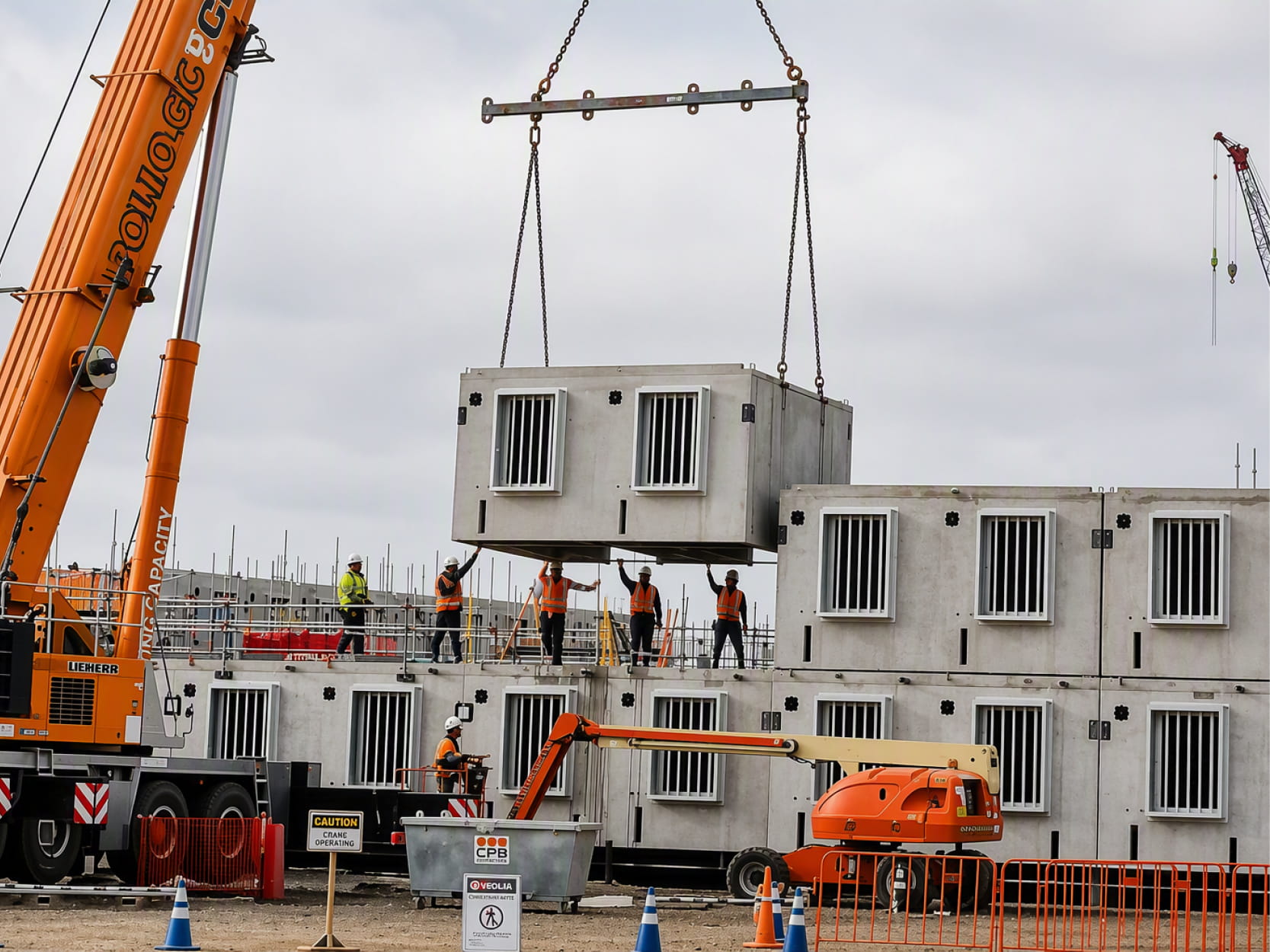
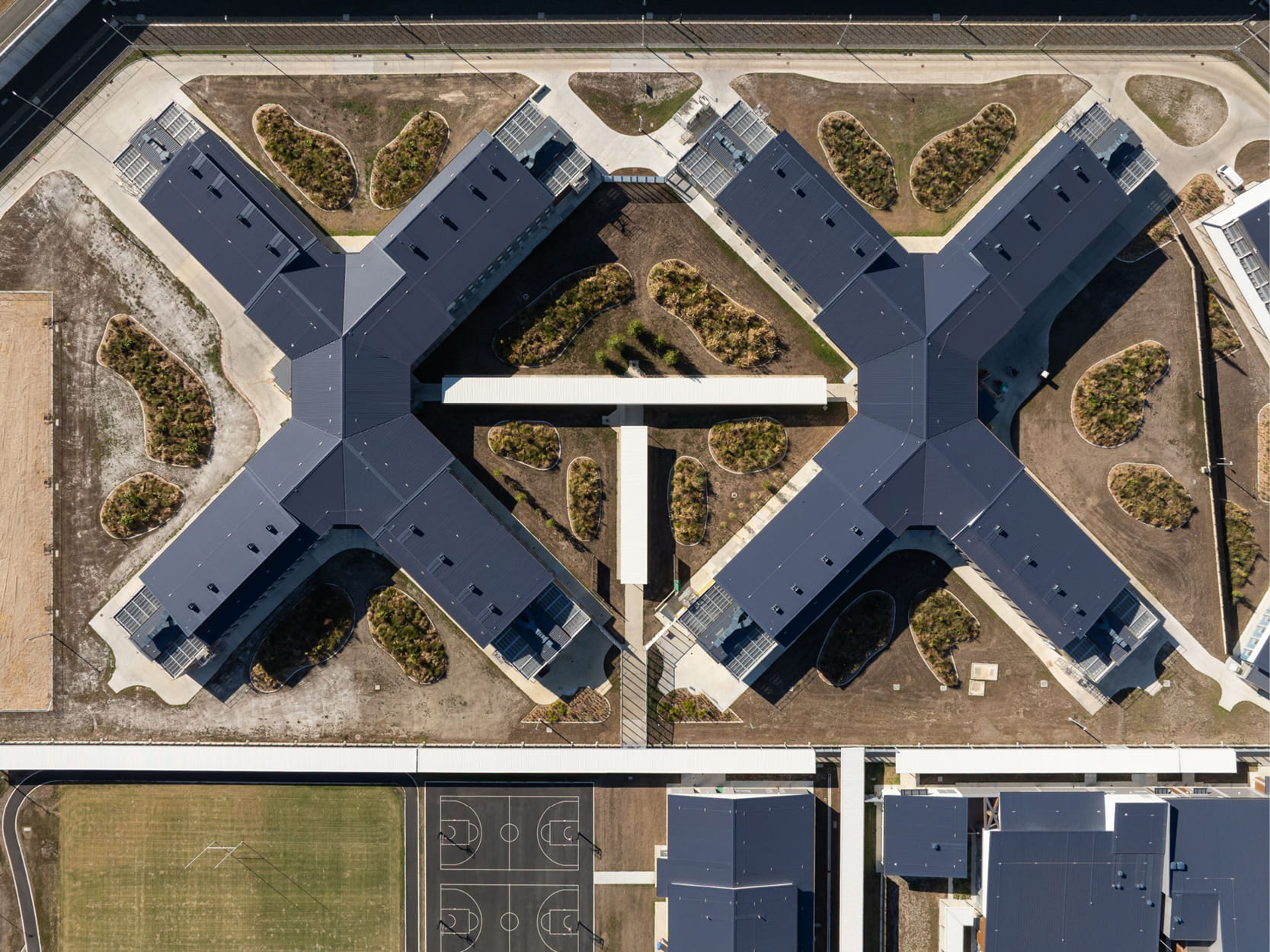
| Above: At Waikeria Prison in New Zealand, prefabricated precast accommodation modules were integrated into a structural solution designed for ground conditions susceptible to earthquake-induced settlement and for post-disaster seismic performance. The modules therefore had to be engineered as part of the building’s broader structural and seismic response. |
Containing risk before it reaches site
The efficiency of modular installation depends on the sequence being tested before modules arrive on site. Lifting methodology and construction tolerances need to be addressed during design, particularly where volumetric modules are delivered just in time.
If the sequence is not properly resolved, the impact can compound quickly. A misaligned connection or unaccounted-for tolerance can hold up installation, affect following deliveries and add storage, transport and cranage costs.
Detailed BIM coordination supported by Virtual Design and Construction (VDC) can help the team review installation sequencing, spatial constraints and critical interfaces before work reaches site. Additionally, practical construction engineering experience can identify where tolerances, lifting arrangements or temporary conditions could interrupt an otherwise repeatable process.
Unlocking wider industry adoption of modularity
Wider adoption depends on the industry carrying proven modular approaches from one project to another rather than rebuilding the delivery model each time. At project level, standardisation strengthens the commercial case. Across the market, a steady pipeline gives manufacturers confidence to invest and lets project teams build on established design and delivery methods.
Procurement needs to value programme certainty and reduced site activity, not just upfront cost. Teams also need to be formed around the delivery model from the start, with designers, contractors and manufacturers involved early enough to shape the system.
Regulation is starting to adapt. NSW has passed reforms to bring prefabricated buildings into the approvals system and is investing in expanded MMC manufacturing capacity. Modular construction can reduce activity on site and improve delivery certainty, but only when the project team does more of the thinking earlier. It is not a shortcut. It is a different way of structuring design and delivery.