- April 2, 2026
- 7:56 am
Building Imperial College London’s Next Generation
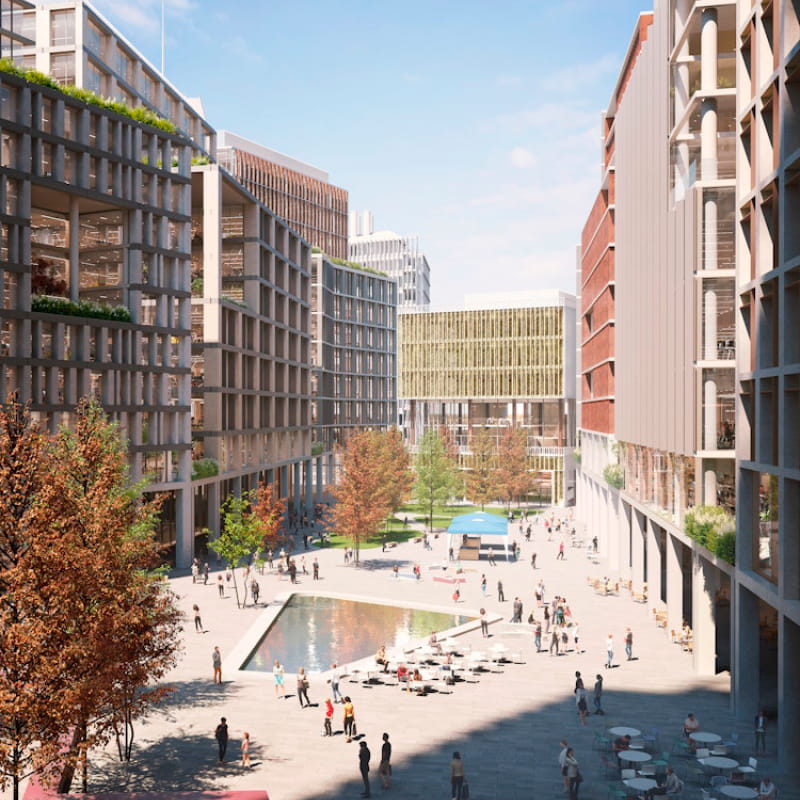
Since the early stages of Imperial College’s White City Campus masterplan, our Pre-Construction Solutions (PCS) team at Robert Bird Group has been supporting with construction and programme advice. Led by our PCS Director, Simon Houska, we’re shaping how this complex, phased campus is delivered in practice.
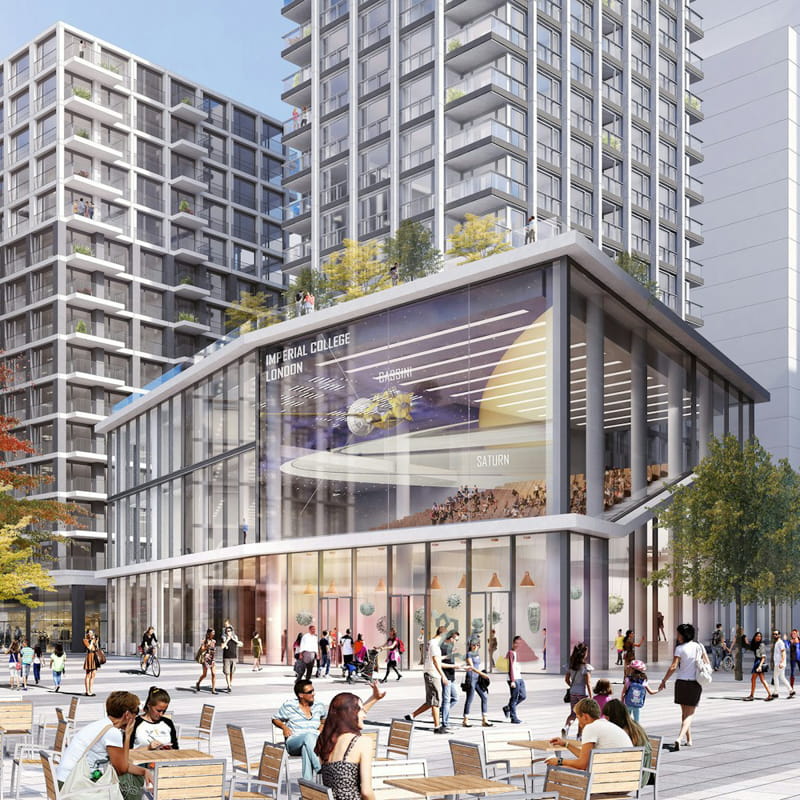
The recent submission of a planning application for the AI-focused Academic Building is an exciting step forward in the next phase of development. The proposed 12-storey building will play a central role in the university’s ambition to create a world-leading centre for research, innovation and collaboration in West London.
“The Academic Building is a flagship project for the campus. It sits in a highly visible location and will be the first building people see when entering the site.”
– Simon Houska, PCS Director, Robert Bird Group
Robert Bird Group’s Contribution
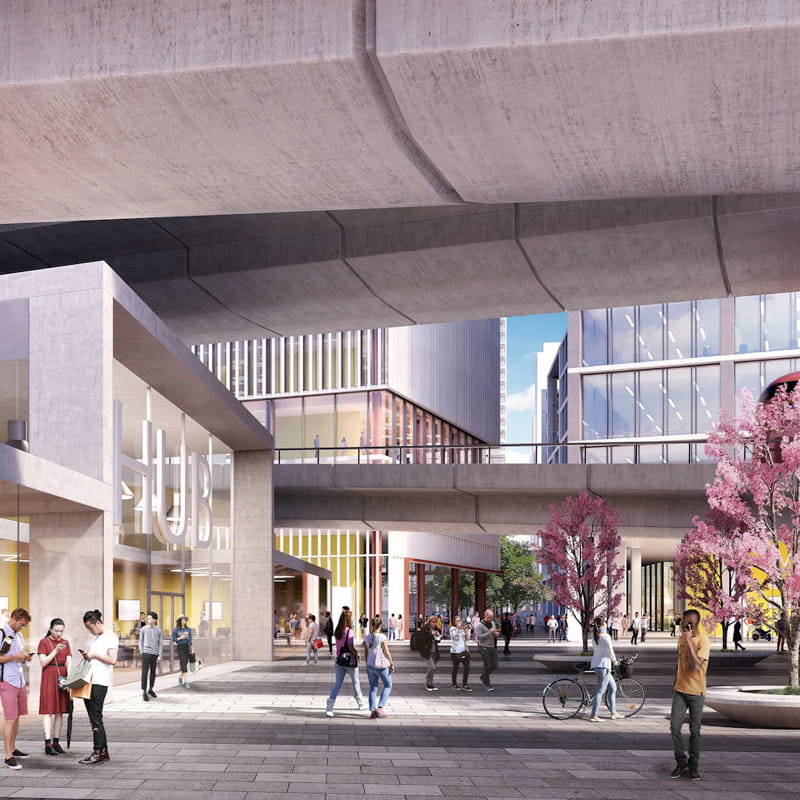
Such an ambitious project comes with significant delivery challenges. The campus is constructed beneath the elevated A40 Westway, around a public realm, and alongside existing occupied buildings, with pedestrian and vehicle access required throughout construction. Addressing these constraints early was essential.
We were engaged at masterplan stage to test the feasibility of delivering plots against ambitious timelines. Working initially with limited information at Stage 0 outline planning, we established a realistic baseline for how the campus could be built, enabling informed decision-making as designs developed.
Our scope included producing design, procurement and construction programmes for both the original masterplan and a series of option schemes. We delivered detailed construction vehicle logistics strategies, developed tower crane approaches, identified hoarding locations and assessed interfaces with the public realm.
Using available architectural massing models, we created a 4D interactive model of the campus to test sequencing, access and risk across multiple plots. This allowed the client team to tangibly visualise how the campus could be delivered over time and how individual design decisions would affect programme, logistics and buildability.
“At the masterplan stage, the impact of the 4D modelling was immediate. When we first presented it, the client commented that it was the first time they had really seen the project come to life.”
– Simon Houska
The Academic Building
Logistics and buildability were key to achieving a viable programme for the Academic Building. We demonstrated that to achieve the fastest delivery, certain architectural ambitions would need to be reconsidered.
Our assessment of a proposal to cantilever a portion of the building over a live road demonstrated the impact of this approach to programme, temporary works and material quantities. As a result, the design team ultimately adopted a shorter cantilever and introduced additional storeys instead, still achieving the desired floor area while improving buildability and programme.
We also worked with the design team to reshape elements of the building to better support construction sequencing. As column layouts were rationalised and structural and architectural changes progressed, we refreshed the programme repeatedly, consistently demonstrating time savings.
“Our role was to bring programme logic and construction metrics into the conversation. Because our programmes were underpinned by transparent assumptions, quantities and production rates, we were able to clearly explain why changes lengthened or shortened the programme.”
– Simon Houska
A Collaborative Approach
The success of the White City Campus to date has been underpinned by trust and collaboration. Our value engineering workshops have fostered constructive conversations and a collaborative approach to problem-solving. This mindset has helped the relationship between engineer, client and architect grow continually stronger.
Programme-led thinking is now embedded earlier in design discussions, with ideas tested collectively before they reach the client, creating confidence on all sides. That mutual understanding has led to smoother decision-making and a strong sense of alignment.
As the campus continues to take shape, those relationships are just as important as the technical solutions in delivering this exciting new chapter for Imperial College London.
“Simon and the PCS team provide a valuable construction advisory service. Their in-depth construction knowledge and meticulous approach provides the project team with clear programme, logistics and relevant construction advice. This, combined with their independent and unbiased perspective was instrumental in helping the team make informed decisions to unlock the masterplan’s potential, and to better understand and coordinate the construction demands on the development.”
– Fergal Burke, Director of Masterplanning (White City), Imperial College London