
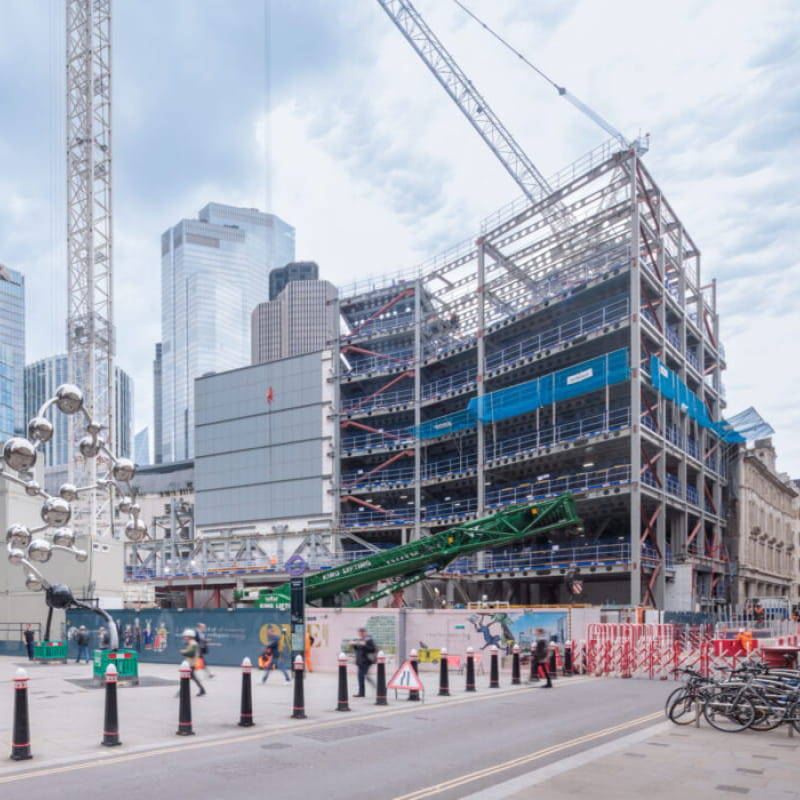
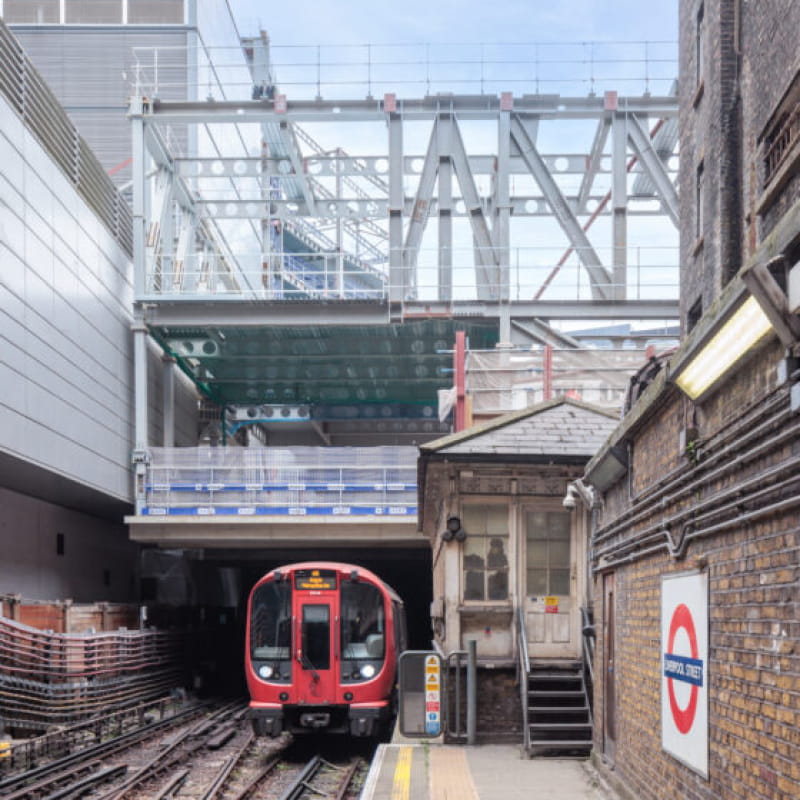
One Liverpool Street is a ten-storey commercial development with two basement levels, occupying a prominent corner site at the junction of Liverpool Street and Blomfield Street, beside the historic Finsbury Circus. Designed by Eric Parry Architects for Aviva Investors and TfL, this ambitious scheme delivers Grade A office and retail space directly above the operational Metropolitan line and the Elizabeth line tunnels. Upon completion, it will provide around 176,000 sq ft of mixed-use space, including 92,000 sq ft of next-generation workspace and retail, contributing to the ongoing regeneration of this bustling transport hub in the heart of the City.
Engineering Above Live Infrastructure
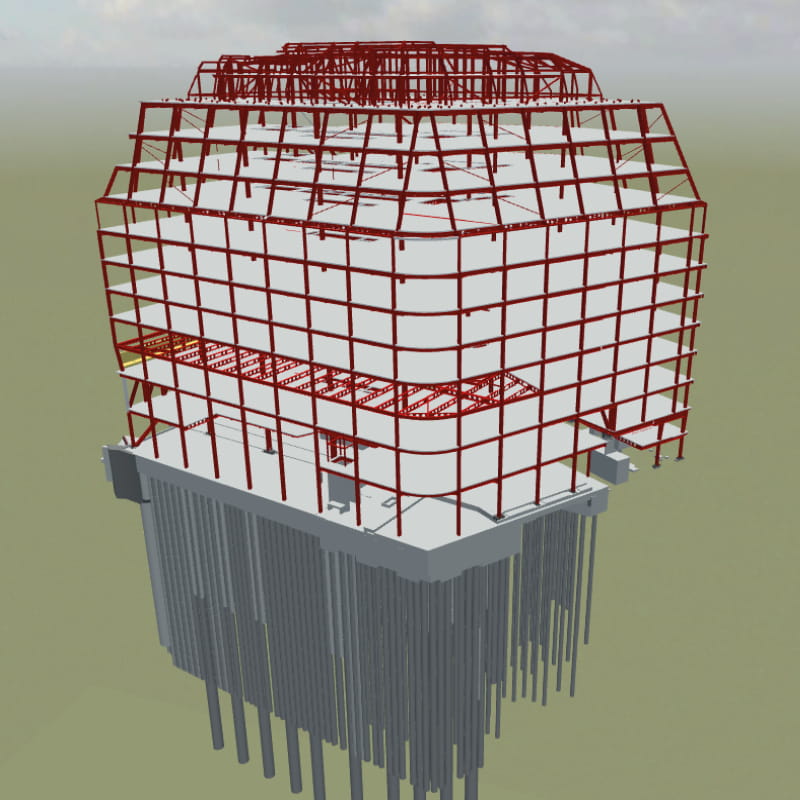
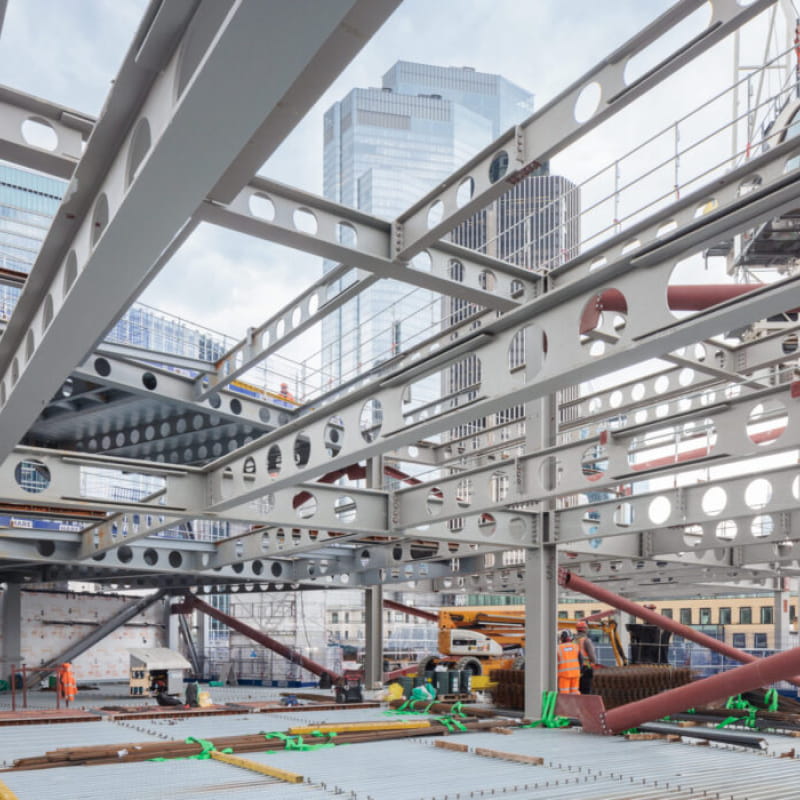
One of this project’s key challenges was its location. The development sits within one of London’s most technically constrained sites. Built directly over the London Underground and new Crossrail assets, the structure spans live railway infrastructure through a network of complex transfer structures. These include nine 4.5-metre-deep trusses and 173 piles reaching up to 43 metres deep, supported by isolation bearings of varying stiffness to minimise vibration and noise transmission.
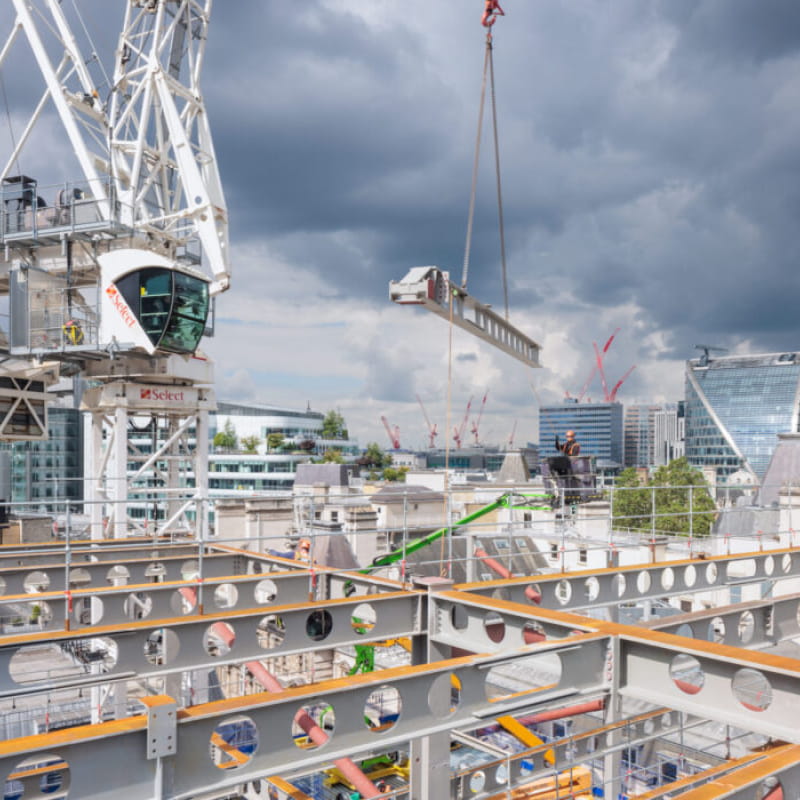
We were engaged for our design for delivery expertise to validate the existing Stage 4 permanent works design and integrate it with a detailed construction-staged sequence, ensuring the client’s delivery programme remained achievable. Working with John F Hunt on the substructure and enabling works, and Mace on the superstructure, we provided technical assurance and buildability-focused refinements that simplified and de-risked construction above live assets.
Added Value Through Design for Delivery
We introduced a series of refinements that significantly improved constructability and reduced programme risk. We simplified the performance requirements of the isolation bearings, standardising their properties to streamline manufacture and ensure consistent load distribution. The need to jack four key columns above the Blomfield Box was removed, simplifying the transfer truss interface and reducing risk at critical connections with London Underground assets. We also eliminated the requirement for jacking and modification of the existing transfer slab above the TL79 masonry archway, improving buildability and reducing the risk of disturbance to the live infrastructure.
Additionally, we developed a split construction sequence for the northern and southern parts of the structure, maintaining temporary stability and allowing work to progress efficiently before completion of the full diaphragm connection.
Sustainability and Smart Design
Sustainability is integral to One Liverpool Street’s design. The fully electric building achieves BREEAM Outstanding through its use of air source heat pumps, triple glazing and high-efficiency systems. HEPA filters improve air quality, while a green roof enhances biodiversity and manages rainwater.
By making use of air rights above existing rail assets, the project maximises urban density within a transport-rich location, reducing pressure for new development on undeveloped land and supporting London’s sustainable growth strategy.
Independent Peer Review and Category III Check
We were also engaged earlier in the project to undertake a structural and geotechnical peer review and an independent Category III check of the Mott MacDonald impact assessment for the LUL and Crossrail assets. This involved reviewing the Stage 4 design proposals to identify opportunities to enhance value, minimise risk and improve constructability across the foundation, substructure and superstructure design.
We proposed a range of value engineering measures, including the adoption of a piled raft foundation to remove the need for wet Thanet Sand piles, the avoidance of demolition works above sensitive LUL tunnels, and simplifications to the superstructure layout that reduced steel tonnage. We also identified opportunities to eliminate pile extraction in the basement through a grouting methodology, remove unnecessary jacking requirements at plinth supports, streamline truss arrangements, and resolve documentation gaps, improving buildability and reducing programme risk.
The Category III check required advanced numerical modelling to simulate displacements of 29 nearby assets, including tunnels, vent shafts and listed structures. Working closely with Mott MacDonald, LUL and Crossrail, we ensured the design remained within strict asset tolerance limits and provided the client team with confidence that the proposed works would not adversely affect live operations.