
Geotechnical Engineering
Our dedicated geotechnical team supports complex building and infrastructure projects across the globe. We provide expert input on excavation, foundation and substructure design, with extensive experience working in constrained urban environments. Combining advanced analytical tools with practical construction insight, we help clients reduce risk, optimise design and sequencing, and deliver efficient, buildable solutions from the ground up.

BIM Capabilities
Since our groundbreaking use of BIM in 2008 for the 100 Bishopsgate project in London, we have delivered a multitude of complex projects globally, continuously refining our tools, systems, and processes towards advanced BIM maturity.
Geoenvironmental Engineering
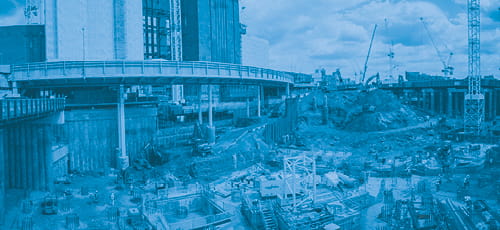
Our geoenvironmental team’s expertise aids clients in unlocking complex contaminated sites. The team assesses contaminated land and advises on potential remediation for a range of sites, to support the due diligence process, to assess statutory risk.
Master Planning
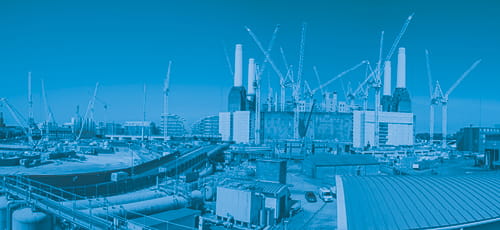
As cities grow and land becomes increasingly constrained, delivering efficient, integrated urban renewal is essential to enhancing communities while leading regenerative design.
Our Capabilities
We provide a wide range of geotechnical services tailored to the demands of modern construction, including site appraisal, ground modelling, risk assessments, site investigation planning, foundation design and retaining wall systems. Our team specialises in deep basement excavation, soil-structure interaction, earthworks and propping strategies, using both 2D and 3D finite element modelling to simulate ground behaviour and inform design decisions.
We also provide temporary works design, slope stability analysis, dewatering strategies and advanced monitoring specifications.
Our close collaboration with major asset owners, including Network Rail, Crossrail and Thames Water, is key to the success of our work on sensitive sites. Whether addressing ground movement risk, optimising earthworks reuse or supporting tunnelling and shaft works, we deliver technically rigorous, well-coordinated designs that align with construction methodology and programme requirements.
- Site appraisals
- Ground-based risk assessments
- Site investigation design, management and interpretation
due diligence consultancy - Foundation and substructure design
- Soil/structure interaction analyses
- Ground movement predictions
- Asset protection services with statutory authorities and infrastructure operators
- Movement monitoring specification and interpretation
- 2D and 3D finite element analysis
Our Specialisms
Asset Surveys, Monitoring, Protection & Life Extension
We ensure existing structures are safe and protected throughout a project’s lifecycle. We conduct thorough asset condition surveys and real-time movement monitoring to safeguard buildings, bridges and infrastructure adjacent to works. By engaging early with owners and authorities, we implement tailored protection strategies that prevent damage during nearby construction. We’re equally adept at extending a structure’s useful life, identifying repair and strengthening solutions that avoid unnecessary demolition. From heritage landmarks to critical infrastructure assets, we bring a proactive, expert approach that preserves structural integrity, minimises risk and adds years of safe service for our clients.
Blast Analysis
We provide leading blast engineering to keep people and structures safe from extreme events. We simulate how buildings respond to explosions and impacts using advanced nonlinear analysis, revealing true capacity reserves beyond code assumptions. This detailed understanding allows us to design cost-effective blast protection, hardening critical elements and mitigating progressive collapse without excessive overdesign. We’ve secured high-profile developments and infrastructure against blast loads, working closely with stakeholders to integrate security discreetly into the structural design. The result is robust, resilient structures that confidently withstand blast scenarios while maintaining architectural vision and functionality.
Bridges
We deliver innovative bridge engineering that goes beyond simply spanning a gap. Every bridge, from a landmark architectural footbridge to a temporary site access way, is tailored to its context and purpose. We add value across the entire bridge lifecycle, considering efficient construction methods, long-term maintenance, and eventual decommissioning from the outset. We collaborate closely with builders and suppliers to de-risk complex bridge projects and optimise buildability. Whether we’re extending the life of a heritage span or creating a new iconic crossing, we provide safe, economical and enduring bridge solutions that serve both our clients and the public.
Cable Net Roof Structures
Our specialists excel in cable net roof design, creating vast overhead spans with minimal structure. We’ve engineered some of the world’s largest cable net stadium roofs, delivering lightweight systems that cover arenas without heavy rafters. We apply advanced form-finding and nonlinear analysis to optimise cable geometry and pretension, ensuring strength and stability under wind and crowd loads. Equally important is our focus on construction methodology: we plan the sequencing and tensioning of cable nets in detail so these complex roofs can be built safely and efficiently. By collaborating with architects and contractors, we produce cable net roof solutions that achieve spectacular, column-free spaces while meeting programme and budget needs.
Complex Basements, Excavations and Underground Structures
Designing deep basements and underground structures in dense urban environments is one of our core strengths. We combine geotechnical and structural engineering to safely deliver complex sub-surface projects like multi-level basements and transit stations. We mitigate excavation risks through innovative retention systems, staged construction analysis and close monitoring. We rigorously predict ground movements and protect adjacent buildings and utilities via robust asset protection plans. With experience across projects from London to the Middle East and Australia, we excel at overcoming in-ground constraints (such as water, rock or heritage footings) while optimising cost and programme. Our integrated approach ensures even the most challenging underground works are delivered safely, on schedule and with minimal community impact.
Construction Methodology and Erection Sequence
We’re global leaders in developing smart construction methodologies and erection sequences for complex structures. We bridge the gap between design and construction by planning how a building will be built from day one. Our construction engineers consider every factor, the structural system, material availability, crane placement, worker safety, site constraints and contractor strengths, to craft the optimal build sequence. By innovatively sequencing works, we reduce temporary works needs and eliminate unnecessary steps, cutting time and cost while enhancing safety. This integrated “design for delivery” approach gives our clients certainty. Many iconic projects have benefited from our methodology leadership, where our erection sequencing unlocked buildable solutions that others thought impossible.
Construction Logistics and Planning
We ensure that even the most complex construction sites run like clockwork. Our logistics experts work collaboratively with contractors to develop efficient site layouts and delivery strategies. We plan everything from material storage zones and crane locations to traffic management and worker access, all tailored to the project’s phasing. Drawing on decades of global project experience, we anticipate constraints and coordinate phased works, including utilities and public interface, so construction progresses smoothly. Our proactive logistics planning improves safety and keeps programmes on track by preventing bottlenecks. The result is a well-orchestrated construction process where people, equipment and materials flow optimally, adding maximum value to the project.
Construction Materials Handling, Plant and Equipment
We optimise the heavy machinery and equipment behind successful builds. Our construction engineering team meticulously plans the selection and use of plant to suit the project’s methodology. We engage in long-term equipment planning, ensuring the right capacity cranes or custom formwork systems are available when needed to meet programme demands. Where unique challenges arise, we’ve designed bespoke lifting and handling equipment to achieve what standard plant cannot. We also provide guidance on integrating temporary works with plant, such as crane bases and propping, to maintain safety. By aligning our equipment strategy with the engineering design, we help contractors work more efficiently, safely and economically on complex projects.
Computational Design
We use computational design to drive efficiency and creativity across our projects. Our holistic, human-driven approach integrates cutting-edge digital tools and workflows, from parametric modelling and algorithmic design to automation and BIM. This enables us to rapidly explore options, optimise structures and eliminate errors by linking design and data. For example, we use parametric models to test countless “what-if” scenarios, and automation scripts to speed up repetitive tasks, freeing up time for our team to focus on innovation. The result is flexible, optimised designs delivered faster and with greater accuracy. By continuously investing in technology and training, we stay at the forefront of digital engineering, offering smarter, more reliable outcomes for our clients.
Diagnostic Inspections and Reports
We help clients understand the true condition, performance and risk profile of their existing assets. Our engineers undertake detailed inspections and condition assessments across operating and occupied facilities to identify defects, deterioration and structural vulnerabilities. Using targeted non-destructive testing and advanced digital tools, we investigate root causes, assess compliance with current standards and predict future performance. We provide clear, prioritised recommendations for repair, strengthening, monitoring and life extension, supporting informed maintenance and investment decisions. Where required, we coordinate specialist inputs from materials, corrosion and surveying experts to deliver robust, actionable reporting that improves asset resilience and long-term value.
Demolition, Deconstruction and Dismantling
We provide specialist engineering for the safe deconstruction of structures. We plan demolition methodologies in tandem with construction sequencing so that temporary supports, cranage and cut sequences are all engineered for stability. Our experience includes complex urban demolitions, such as removing interior structures while retaining heritage façades for redevelopment. We prioritise safety, controlling the risk of collapse or unplanned damage through detailed analysis and on-site monitoring. We also consider material salvage and recycling opportunities to support sustainability. By applying the same ingenuity to dismantling as we do to building, we ensure structures are taken apart efficiently and with minimal impact on surrounding assets.
Earthworks Design, Retention and Specification
We deliver earthworks and retention solutions that make the ground work for the project, not against it. Our engineers carefully plan earthworks to minimise waste and cost, optimising cut and fill to reduce imported or exported soil. We design stable slopes and retaining structures (temporary and permanent) tailored to site geology, using techniques like mechanically stabilised earth (MSE) walls and sheet piles to hold back ground safely. Where soil conditions are difficult, we specify appropriate ground treatments, such as underpinning, grouting or dewatering, to improve stability. Combining meticulous analysis with practical know-how, our designs secure excavations and embankments while saving time, money and carbon by reusing materials and avoiding over-engineering.
Flood Risk Management, SuDS and Stormwater Drainage
Our civil engineering team are experts at keeping sites dry and turning water challenges into opportunities. We assess flood risk and stormwater flows on every project, using advanced modelling to predict how major rain events could affect the site. We then develop comprehensive drainage strategies, often using Sustainable Urban Drainage Systems (SuDS), to mitigate those risks. This can include rainwater harvesting, infiltration basins, green roofs and detention tanks to manage runoff naturally. By designing with climate change in mind, we help future-proof developments against more intense storms. The outcome is a project that not only meets regulatory requirements for flood prevention but also improves water management and resilience, creating safer communities and reducing strain on public systems.
Forensic Engineering
We bring a deep understanding of materials, loading and construction to methodically investigate structural problems or failures. Using advanced analytical techniques, like detailed finite element simulations and non-destructive testing, we can unravel complex failure mechanisms to determine root causes. We also recommend practical remedial measures and improvements to prevent recurrence. Our forensic engineering service gives asset owners and insurers clarity and confidence, turning incidents into actionable lessons and a path to restoration.
Foundation Design and Re-Use
We deliver foundation solutions that are solid, efficient and, where possible, utilise what’s already there. Our engineers design all types of foundations, from shallow footings to deep piles and rafts, tailored to the ground conditions and building loads. We also specialise in re-using foundations for redevelopment projects. By thoroughly assessing a structure’s as-built capacity, we often find that existing piles or footings can be strengthened or adapted to support new loads. This can save significant time and cost while reducing the project’s carbon footprint.
Ground Remediation and Treatment
We provide targeted ground remediation techniques to transform poor or problematic soils into a dependable foundation. We start with detailed ground investigations, identifying issues like soft clays, loose fill, contamination or a high water table. Our geotechnical experts then develop the right treatment plan, for example, using pressure grouting to strengthen weak zones, installing drainage or dewatering systems to lower groundwater, and implementing soil mixing or stabilisation where needed. We also design underpinning schemes to support adjacent structures before excavation. Each solution is tailored to site conditions and project requirements.
Heritage and Adaptive Reuse
We support the preservation and transformation of existing and heritage structures, enabling buildings to meet modern requirements while respecting their historic character. Our multidisciplinary engineers assess structural capacity, material condition and compliance obligations, developing sensitive solutions for repair, strengthening and adaptation. We work across refurbishment, change of use and vertical or horizontal extensions, often unlocking opportunities to reuse existing structures and foundations. By combining technical rigour with an understanding of heritage constraints, planning controls and sustainability goals, we help clients extend asset life, reduce embodied carbon and deliver adaptive reuse projects that balance conservation, performance and commercial viability.
Heritage Buildings and Structures
We have a proud track record of preserving and revitalising heritage structures. Our engineers carry out detailed assessments of aged materials and hidden structural systems to map out a building’s true capacity and condition. We then design sympathetic interventions to extend its life: reinforcing existing elements, discreetly adding new support or adapting the structure for modern uses without altering its character. Our experience spans from iconic power stations to Victorian-era bridges, where we’ve combined technical excellence with respect for heritage considerations. We also use innovative tools like laser scanning, drones and AR to document and monitor heritage works.
Long-span Roofs
From aircraft hangars to stadium covers, we design long-span roofs for vast open spaces. We use trusses, space frames, shells or tension structures to achieve broad coverage with minimal supports. Our engineers tackle the unique challenges of long spans, controlling deflections, vibrations and wind uplift, through advanced analysis and the use of lightweight, high-strength materials. Construction planning is integral: we develop methods like segmental erection or strand-jacking to safely install massive roof structures. Around the world, our long-span roofs crown arenas, terminals and halls, delivering unobstructed interior space without compromising structural safety or economy.
Marine Structures
We deliver structural and construction engineering solutions for marine infrastructure operating in highly demanding environments. Our experience spans ports, wharves, cruise and ferry terminals, marinas and associated infrastructure, with designs focused on durability, safety and long-term performance. We engineer pile systems, crane supports and marine structures with extended design lives, accounting for corrosion, impact loads and harsh exposure conditions. Alongside new works, we undertake detailed condition assessments and develop maintenance and protection strategies to extend asset life. From early planning and design through to construction and ongoing operation, we provide practical, future-ready solutions for public and private marine facilities.
Mass Timber Structures
We provide specialist engineering for mass timber buildings, supporting low-carbon construction through efficient, buildable structural design. Our team delivers structural, civil and construction engineering services across the full project lifecycle, from early coordination and digital integration through to erection sequencing. We design and analyse systems using CLT, glulam and hybrid solutions, optimising seismic performance, constructability and programme outcomes. Drawing on lessons from major timber projects, we help align layouts, services and façades with timber structural behaviour. Where appropriate, we also assess interfaces with concrete and steel elements to ensure robust, durable and well-integrated mass timber solutions.
Modular Construction, MMoC and DfMA
We’re at the forefront of Modern Methods of Construction (MMoC), leveraging Design for Manufacture and Assembly to revolutionise how buildings are delivered. We’ve engineered landmark modular projects, from Australia’s tallest precast-wall tower to one of the world’s tallest timber buildings. Our team works collaboratively to embed modular thinking early, ensuring structural designs are optimised for factory fabrication and quick on-site assembly. We devise innovative modular systems (including our own, Autobox) and use digital tools to refine each component for weight, strength and ease of installation. By reducing site labour, waste and programme durations, we deliver projects faster, safer and more sustainably, without compromising architectural quality or flexibility.
Movement Monitoring, Specification, Analysis and Interpretation
On complex projects, we ensure there are no surprises by implementing rigorous movement monitoring regimes. We specify precise instruments and survey programmes to track settlement, deflection or vibration in structures and surrounding ground. Our engineers establish baseline predictions and allowable movement thresholds, then continuously analyse the data as construction progresses. We collect numbers and interpret them in context, distinguishing normal construction movements from concerning trends. If an issue is detected, we advise on mitigation, such as adjusting sequences or adding support. From deep excavations next to sensitive buildings to vibration monitoring in laboratories with sensitive equipment, our monitoring and interpretation service provides clients and authorities with confidence.
Movable Structures
We bring dynamic design to life with our expertise in movable structures. We design and engineer systems that can change position or configuration on demand, such as operable roofs over stadiums, retractable architectural features or moving pedestrian bridges. Our multidisciplinary approach ensures the moving parts are seamlessly integrated: the structure can carry loads in all positions, the mechanical systems operate smoothly, and safety interlocks are in place. We perform detailed analysis for both static and dynamic states, accounting for inertia, wind when open or closed, and fatigue over many cycles. By collaborating with specialist contractors, we refine the details of motors, bearings and controls as part of the engineering. The result is robust, reliable movable structures that enhance functionality and user experience, delivered with our hallmark attention to detail and safety.
Roads and Pavements
Our civil engineers deliver smart, fit-for-purpose road and pavement designs for projects. We design internal road networks, site accesses and public roadway upgrades with large and small an eye for optimal geometry and compliance, even on tight urban sites. Our team works closely with masterplanners and utility engineers to ensure roads interface smoothly with buildings, landscaping and phased construction logistics. We’re adept in specialised pavement design too, from heavy-duty hardstands and crane outrigger pads to temporary haul roads and piling mats that can withstand construction loads. Every design considers longevity and maintenance, meeting local authority standards while maximising value. Thanks to our integrated approach, the roads and pavements we design not only meet technical requirements but also contribute to the overall success and accessibility of the development.
Research and Development
Innovation drives us. We actively invest in research and development to push engineering boundaries and solve emerging client challenges. Within our Advanced Technical Services hub, our in-house innovation lab, our engineers develop and test new ideas, tools and techniques beyond conventional practice. This has led to proprietary digital platforms like Reveal (for 4D construction simulation) and novel construction technologies like our Autobox modular system. We also collaborate in industry research on materials, seismic resilience, digital engineering and sustainability, ensuring we stay ahead of the curve. By fostering a culture of curiosity and continuous improvement, we turn R&D into practical advances. Our clients benefit through more efficient designs, new construction methodologies and inventive solutions that keep their projects at the cutting edge of what’s possible in the built environment.
Refurbishment, Repair, Renewal and Re-Use
We help clients unlock the potential in existing structures through expert refurbishment and adaptive re-use engineering. We focus on assessing and strengthening older buildings so they can serve new purposes or meet modern standards rather than being demolished. Our engineers identify what can be preserved, what needs repair and how new structural elements can be woven in, all to extend the structure’s life safely and economically. We use techniques like carbon fibre wrapping, steel plate bonding or selective member replacement to upgrade capacity, while respecting architectural heritage when applicable. In line with our sustainability goals, we also strive to reuse structural components and foundations wherever feasible. Our collaborative approach to renewal projects ensures that owners get the best of both worlds: the charm or investment of an existing building, and the performance and safety of a new one.
Seismic and Wind Analysis Engineering
We provide sophisticated seismic and wind engineering to ensure structures perform under nature’s most demanding forces. Our team designs buildings and infrastructure to resist earthquakes using advanced techniques like performance-based seismic design. We model nonlinear behaviour and energy dissipation to optimise structural systems, often achieving safer designs with less material by understanding true inelastic performance. For wind, we analyse dynamic response and wind loads on tall and complex structures, working with wind tunnel data to fine-tune designs for strength and comfort. We address lateral stability for towers up to 150 floors, designing efficient damping and outrigger systems when needed. Whether in high seismic zones or cyclone-prone regions, our integrated wind and earthquake engineering ensures our structures meet stringent safety standards and protect occupants, without unnecessary cost or compromise to architectural intent.
Site Appraisals, Risk Assessments and Due Diligence
Before committing to a site or design, clients turn to us for comprehensive upfront assessments. We conduct site appraisals and due diligence studies that cover structural, geotechnical and environmental factors, giving an early picture of constraints and opportunities. This can include reviewing existing structures on site for potential re-use, evaluating ground conditions and contamination risk, and identifying interfaces with adjacent properties or infrastructure. We also carry out risk assessments, pinpointing issues such as flood risk, seismic hazards or regulatory approvals that could impact the project. Our multidisciplinary team provides clear, pragmatic advice on how to mitigate identified risks or adapt the development strategy accordingly. Our thorough front-end due diligence and risk assessment service helps clients make informed investment decisions and sets the foundation for smoother project execution with fewer surprises.
Special Structures
We thrive on tackling special structures that require out-of-the-box thinking. These are the unique projects (atypical forms, complex geometries or innovative systems) that don’t fit the standard templates. Our Advanced Technical Services team brings together diverse expertise to solve such challenges, often using transdisciplinary approaches and high-fidelity analysis. We’ve engineered everything from bespoke moving sculptures to novel offshore structural systems, validating concepts with rigorous computer simulations and, where needed, physical testing. For manufacturers developing new structural products, we provide virtual proof-of-concept and design refinement, blending our knowledge of first principles with creative problem-solving. In every case, we approach specialist structures with a fresh mindset and a toolkit of advanced techniques, delivering safe, certifiable solutions that enable innovation and turn visionary ideas into reality.
Staged Construction Analysis
We use staged construction analysis to ensure structures remain safe and true to design at every step of the build. Rather than assuming a building is erected all at once, we simulate the actual sequence, adding steel or concrete piece by piece, floor by floor, to see how the structure behaves during construction. This detailed time-step analysis allows us to confirm that partially built stages are stable and that any locked-in stresses from construction won’t cause problems later. For example, in long-span roofs or tall towers, our methods predict how camber, deflections and stress accumulate as elements are installed. With these insights, we can adjust member sizes or camber to ensure the final as-built geometry is correct and free of undue stress. Our leadership in staged construction analysis means our designs account for real-world conditions, giving contractors and clients confidence that what goes up will perform exactly as intended once complete.
Structural Engineering in all Materials
Our structural engineers are fluent in the full spectrum of construction materials, enabling truly optimised designs. We regularly work with steel, reinforced and prestressed concrete, timber, masonry, aluminium and emerging composites, selecting the best or a blend of materials to suit each project. Our experience includes ultra-slender steel towers, long-span concrete floors, engineered timber buildings and even structures incorporating fabric or carbon-fibre elements. This breadth allows us to develop innovative solutions, for example, using timber or composites to improve sustainability or reduce weight, without compromising performance. It also means we can confidently retrofit or modify structures, understanding how different materials interact. By not being limited to a single material, we deliver unbiased designs that harness the strengths of each, resulting in efficient, buildable and enduring structures.
Structural Façade Engineering
Our façade engineering bridges the gap between architecture and structural performance, designing support systems for curtain walls, cladding and glazing that withstand wind loads, seismic movements and temperature variations. We analyse façade loads and movements in tandem with the primary structure, for example, managing floor slab deflections to accommodate sensitive glazed façades, to keep the envelope watertight and safe under all conditions. Whether it’s a sleek unitised glass curtain wall on a high-rise or a heritage façade retention scheme during redevelopment, we provide the technical expertise to anchor and brace façade elements without compromising architectural intent. By working closely with architects and façade fabricators, we deliver solutions that meet performance standards, regulatory requirements and design ambitions.
Structural Fire Engineering
We deliver advanced structural fire engineering that protects buildings and occupants while often reducing overspecification. Rather than relying solely on prescriptive code formulas, we perform performance-based fire analyses, using computational simulations to predict how structures behave during fire and how fire protection systems perform. This deeper understanding reveals the real resilience of materials and connections, allowing us to optimise fireproofing strategies. In many projects, we’ve safely reduced passive fire protection on steel or concrete elements by demonstrating sufficient inherent capacity, always in full compliance with safety codes. We also assess fire-induced progressive collapse scenarios, designing for redundancy and stability. Our holistic approach gives clients confidence that their structures can withstand fire events, all in a way that’s cost-effective, efficient and minimally intrusive to the architecture.
Sustainable Design & Construction
Sustainability is at the heart of our approach. We aim to reduce environmental impact on every project by advocating for efficient design, material reduction and reuse, and low-carbon solutions. We embed sustainable practices into the design process, from optimising structural forms to use less material, to specifying recycled or locally sourced products, and designing for future adaptability or deconstruction. We rigorously measure embodied carbon and actively pursue opportunities to minimise it, supporting our clients’ carbon reduction goals. We’re committed to industry initiatives for renewable energy and green infrastructure, contributing to wind farms, solar developments and sustainable urban drainage schemes. Integrating sustainability into our design philosophy, we deliver buildable, cost-effective structures that are significantly better for the planet.
Tall, Supertall and Megatall Buildings
We have a global track record in engineering tall buildings that define city skylines. From high-rises in Australia and Asia to landmark towers in the Middle East, we’ve delivered design and construction engineering for some of the world’s most iconic skyscrapers. Our tall building specialists excel in optimising structural systems, whether steel, concrete or composite, and in managing lateral drift, acceleration and complex vertical sequencing. We often collaborate early with wind tunnel testers and use advanced analysis to enhance performance without compromising safety. Recognised by international tall building awards, we consistently deliver slender, efficient towers that meet demanding criteria and are constructable, even at extreme heights.
Temporary Works
We provide end-to-end Temporary Works engineering, ensuring that what holds up a project during construction is just as well-considered as the permanent works. We design and check all types of temporary structures, excavation shoring, crane bases, formwork, scaffolding, props, temporary bridges and more, tailoring each solution to the project’s needs and site conditions. We support both specialist subcontractors (with detailed design and certification) and principal contractors or clients (by developing temporary works schemes, coordinating reviews and acting as independent third-party checkers). Safety and stability are paramount: we simulate construction loads and stages to ensure the temporary works will perform under worst-case conditions. We often find ways to simplify or integrate temporary works to save time and cost, for example, designing permanent elements to act as their own temporary support.
Temporary and Demountable Structures
When structures are needed for a limited time or must be relocatable, we provide efficient solutions. We design temporary and demountable structures that perform reliably and can be dismantled or moved as required. This includes event and exhibition structures, temporary sports venues or stages, and modular installations that need to be erected and struck repeatedly. Our approach focuses on lightweight, reusable components and smart connections that enable fast assembly and disassembly without compromising strength. We consider the entire lifecycle during design, transport, site installation, usage and dismantling. We also ensure that all temporary structures meet appropriate safety standards for their duration of use, including wind and crowd loading. By combining our expertise in construction methodology and modular thinking, we deliver flexible, high-value demountable structures that do their job efficiently and then disappear, ready to be reused elsewhere.
Tensile Fabric Structures
We bring artistry and precision to tensile fabric structures, creating striking lightweight forms that perform under stress. We design tensile membrane roofs and canopies that span large areas with graceful minimalism, using cables or steel edge members to carry forces in pure tension. Form-finding is central to our process; we determine ideal doubly-curved shapes and pretension levels so the fabric remains stable under wind, rain and snow without sagging or flutter. We pay close attention to the detailing of clamps, cladding interfaces and support masts to ensure safe load transfer to the structure and foundations. Our experience spans sports venue roofs, atrium enclosures and shade structures in challenging climates. By combining advanced analysis with deep expertise in long-span and lightweight design, we deliver bespoke tensile fabric structures that are durable, safe and visually compelling.
Utility Coordination
We simplify the complex task of utility coordination on major developments and infrastructure projects. Acting as the central point for in-ground service coordination, we integrate input from all utility providers, including water, sewer, power, telecoms and gas – into our design process. Our engineers build comprehensive 3D models showing proposed utility routes and potential clashes, allowing us to resolve conflicts between utilities or with structural elements early on. We also phase utility works strategically, ensuring that temporary supplies are in place during construction and that permanent installations align with the project’s staging and roadworks. By liaising with authorities and drawing on our experience in civil design, we streamline approvals and avoid delays. Our collaborative approach to utility coordination helps prevent rework and service disruptions, ensuring a fully integrated outcome where all services are delivered on time and without compromise.
Vibration Sensitive Structures
For projects where vibrations must be carefully controlled, we offer specialist engineering to mitigate dynamic response. We combine advanced analytical modelling with practical experience to design for environments where even small vibrations can be problematic, such as laboratories, hospitals, cleanrooms, manufacturing facilities or performance venues. We predict vibration levels from sources like footfall, machinery or nearby railways using dynamic simulations, then design mitigation measures such as tuned mass dampers, base isolation systems or changes to structural form or stiffness. We’ve reviewed and optimised vibration strategies in a wide range of complex buildings, ensuring both occupant comfort and equipment functionality. By proactively addressing vibration risk, we help clients avoid costly surprises and deliver structures that perform precisely as needed.
Featured Projects
Our project successes exemplify how we apply technical expertise and innovative thinking to complex real-world challenges. Explore these selected projects to learn more:
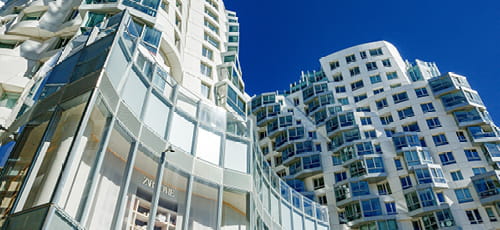
Battersea Power Station
Phase 3A
In 2017, Olympia London was purchased by a consortium of investors, led by Deutsche Finance and Yoo Capital. Inspired by the venue’s history and original purpose, their vision for the space would see Olympia London being transformed into a.....
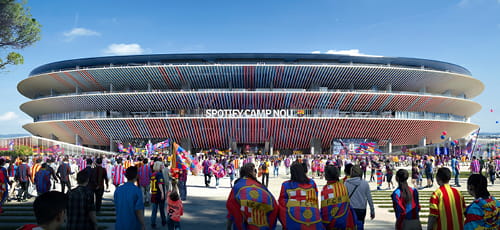
Barcelona Camp Nou Stadium Redevelopment
The 99,000-seat Spotify Camp Nou stadium is currently the largest football stadium in Europe and an icon of the City of Barcelona. The Espai Barca Camp Nou Redevelopment project.....
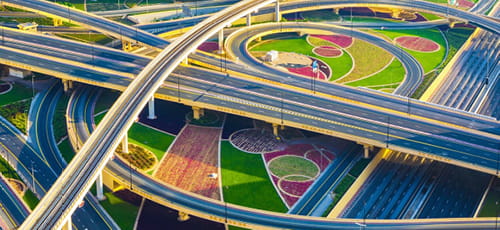
Bluewaters Island Interchange
RBG was responsible for the support of temporary works bridges spanning over the two (2) six (6) lane highway roads, Sheikh Zayed Road. The temporary bridges were designed to support the wet concrete weight of the new interchange.....
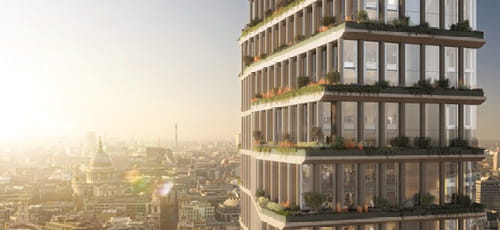
85 Gracechurch Street
The project is a 34-storey high-rise tower situated in London's financial district, part of the Eastern Cluster of the City. The tower’s trapezoidal shape expands toward east, with setbacks from Level 24 to 33, creating a distinct architectural profile.....
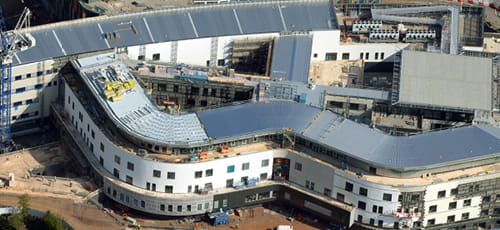
Royal Hospital For Sick Children
41 McLaren Street, North Sydney, is a heritage-listed landmark originally designed by renowned architect Harry Seidler in the 1970s. This adaptive reuse project transforms the former commercial office building into a world-class K–12 educational.....
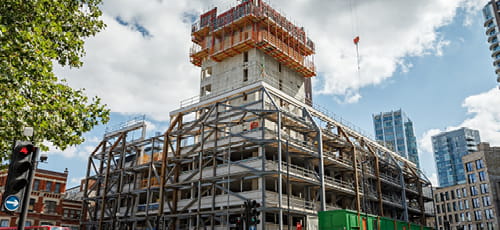
Central House
The former home of The Cass Faculty of Art, Architecture and Design, Central House is located at 61 Whitechapel High Street and abuts the boundary of the Whitechapel High Street Conservation area. Constructed in the 1960s......



Meet our experts
Our experts offer deep technical knowledge and practical experience across sectors and regions. Working closely with clients to understand each challenge, they offer clear advice and innovative solutions, from concept to delivery. Collaboration sits at the heart of how we design, problem-solve and support successful outcomes.